· H28 · Myths · 5 min read
Six Months of Jawline Gum, Zero Jawline
A six-month trial put gum chewing to the test. The jaw it promised never showed up.


Your jaw has been sore for a week. There’s a pouch of Greek tree resin on your desk, you chew it through two lectures and a gym session, and every night you check the mirror for the angle it’s supposed to carve.
It won’t carve it. In the one proper trial, six months of daily gum chewing made people’s bite stronger and left their jaw muscles and jaw shape exactly the same.
Verdict: Doesn’t work for jaw definition.
Progressive overload, for your face
The idea sounds like gym logic, which is why it spreads. “Chew Mastic Gum in increasingly larger amounts and for longer periods of time (just like progressive overload in the gym) and the masseter muscle will get bigger,” wrote wellness influencer Sol Brah back in 2021.
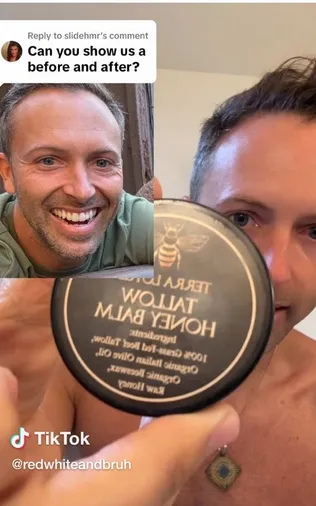
On TikTok it turned into a genre. A clip asking “Can gum give you jawline?” has nearly half a million likes, and a “from no jawline to 😌” video crossed 9 million views on the strength of watermelon gum. Brands sell “the world’s hardest gum” with a skull diagram on the pack.
The loop goes like this:
You want a chiselled jaw → you chew hard gum for hours a day → your bite gets stronger and your jaw starts to ache → your face looks the same.
What the trial found
Researchers at Yonsei University ran exactly the experiment the internet argues about. They split 58 healthy adults into two groups. One chewed gum three times a day for six months. The other did nothing (Jung et al., 2024).
They measured bite force, masseter thickness with ultrasound, and the shape of the lower jaw.
Bite force went up, clearly, by the three-month mark. But the gain came from the teeth meeting over a larger contact area, not from a bigger muscle. Masseter thickness didn’t change. Jaw shape didn’t change.

Half a year of dedicated chewing, and the part people care about stayed put.
Even if the muscle grew, you’d hate it
The masseter sits on the side of your jaw, below the cheekbone. When it gets big, it doesn’t sharpen the jawline. It pushes the sides of your face outward and makes it look wider and squarer from the front.
That’s why “masseter hypertrophy” is something clinics treat, not something they sell. A 2026 meta-analysis of five randomized trials with 536 patients found Botox injections reliably shrink an enlarged masseter and improve the lower-face contour (Machado et al., 2026). People pay to get rid of the exact muscle chewmaxxing is trying to build.

The trial also hints at why the muscle didn’t grow. Gum is a light, repetitive load, and the jaw adapted the cheap way: teeth learned to meet more squarely, so bite force climbed with no new muscle behind it.
That’s why the “it’s working, my jaw is sore” feeling misleads. Hours of chewing tire a muscle doing endless easy work. That tiredness isn’t a sign of growth.
The ache is the warning, not the gain
A lot of chewmaxxing posts treat soreness as proof of progress. Some of the research suggests otherwise. A 2025 systematic review found mixed results, but several studies showed a dose-response pattern: the more often and the longer people chewed, the more jaw-joint symptoms they reported, including muscle pain (Alam et al., 2025).
The good news in the same review: symptoms usually faded once people stopped. The other tell is on X, where “release your masseters” posts go viral because so many people’s jaws hurt from chewing all day.
What shows a jaw
A defined jawline is mostly about what sits on top of the bone. People can read your body fat from your face with surprising accuracy, and lower facial fat is one of the strongest cues to both attractiveness and perceived health (de Jager et al., 2018).
- Lose body fat. Nothing sharpens a jawline faster than less padding over it.
- Fix your head posture. A chin jutting forward and down blurs the jaw-neck angle in every photo.
- Chew gum if you like gum. Fresh breath is a fine reason. A new face isn’t one.
- Already have a wide, bulky jaw? That’s a conversation for a dermatologist or plastic surgeon, not more chewing.
FAQ
Does mastic gum work better than regular gum? It’s tougher, so your jaw tires faster. Harder chewing raised bite force in the trial; nothing suggests it changes shape where regular gum doesn’t.
How long until chewing gum changes my jawline? The trial ran six months and found no change in jaw shape, so there’s no timeline to wait for.
Can chewing gum make my face look wider? If it bulks the masseter, yes. That’s the muscle people have treated with Botox to slim their lower face.
References
- Jung HJ, Hwangbo NK, Park Y, Ahn HJ. Effects of gum chewing training on occlusal force, masseter muscle thickness and mandibular shape: a randomised controlled trial. J Oral Rehabil. 2024;51:2529-36. PMID: 39215439. doi:10.1111/joor.13830
- Machado GF, De Freitas LR, Ribeiro LFS, et al. Efficacy of botulinum toxin for masseter muscle hypertrophy: a systematic review and meta-analysis. J Plast Reconstr Aesthet Surg. 2026;119:212-25. PMID: 42379083. doi:10.1016/j.bjps.2026.06.012
- Alam MK, Shayeb MA, Natarajan PM, et al. Association of temporomandibular disorders and other jaw anomalies in chewing gum users: a systematic review. J Oral Facial Pain Headache. 2025;39:35-47. PMID: 41070532. doi:10.22514/jofph.2025.022
- de Jager S, Coetzee N, Coetzee V. Facial adiposity, attractiveness, and health: a review. Front Psychol. 2018;9:2562. PMID: 30622491. doi:10.3389/fpsyg.2018.02562
Cover: screenshot of a TikTok video, shared as commentary.